6 Ways To Encourage 4-8 Year Olds To Retell A Story (Speaking & Writing)
Maths and English worksheets for your child's year group, made by Sunita, an experienced UK primary school teacher. Print them at home and sit together for ten minutes.
Free trial, no card
Every grammar and writing worksheet for Year 3, in one place
Sign up free, pick your child's year group and print 3 worksheets this week. Made by a UK primary school teacher, yours to use at the kitchen table.
- ✓Made by an experienced UK primary school teacher
- ✓Mapped to the national curriculum, Reception to Year 6
- ✓Print at home and work on paper, no screen needed
No card needed. One teacher, every worksheet.
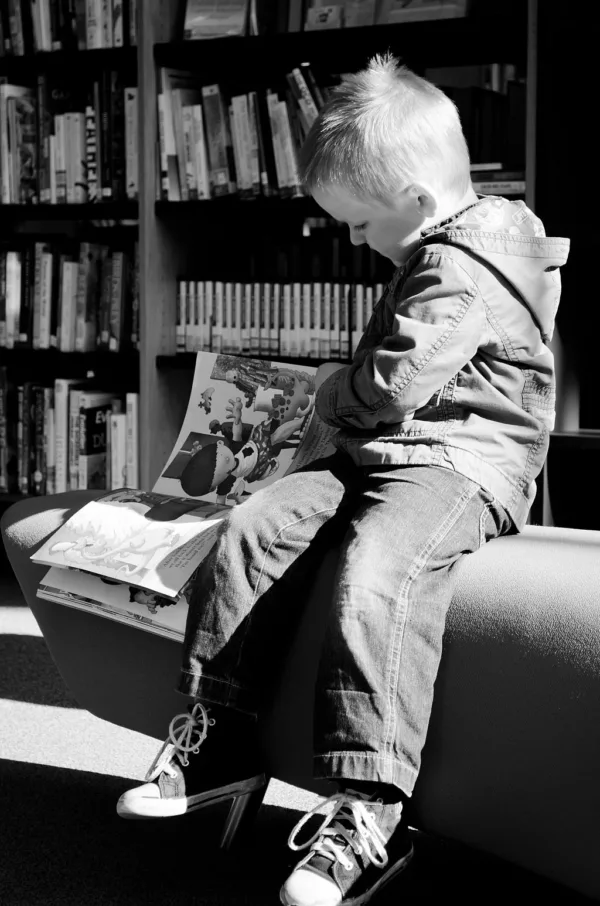
Why Retell A Story?
Most children love to listen to stories being read to them. Many enjoy reading stories by themselves or to an adult or sibling.
Whether it is a short story or a chapter of a longer one, recapping on what has just been read helps children pay attention to what they are reading and encourages them to think about the characters, plot, vocabulary used etc. It is also a chance for them to point out words they may not know the meaning of, or to ask about something they may not have understood.
How can you encourage young children to retell a story?
It may be a story you have just read to them, or one that they already know. Most children will choose to give a one word answer or tell you in two sentences the whole story.
Use these ideas to help your child organise their thoughts and think about the story in more detail.
- Read the story to them and ask them questions at the end.
Try and mix up the questions you ask. Some questions can have quick, short answers, e.g. What did the little girl do? What did she do next? What happened at the beginning, middle, end? Some questions can ask for your child's opinion e.g. Why do you think Cinderella was sad? Who do you think should go to the ball? Why? - Ask your child to retell the story, whilst looking at the pictures.
Buy Story Books For Kids - Ask your child to write, draw, or tell you 4 things they remember about the story.
- Let your child ask you questions about the story.
- Ask your child what they would do if they were a certain character.
- Use a story map to help your child retell the story.
Children can retell the story in their own words or write a sentence next to pictures.
Fiction and Non-Fiction Text
Children should be encouraged to read a variety of text types. Fiction texts children can read include: poems, plays and comics. Non-fiction texts children can read include: newspaper articles, adverts, weather reports, recipes, instructions, manuals and encyclopaedias.
If a child doesn't like reading they could retell something they have watched on T.V. or done activity they have recently taken part in. The aim is to encourage children to recall and remember; to increase their vocabulary and improve their speech and confidence.
As children get older, they will be given more formal activities to complete at school that involves answering comprehension questions.
Take a look at Teach My Kids Maths and English Worksheets aimed at your child's year group at school.
Join Teach My Kids to gain access to to gain access to a wide range of worksheets covering Math and English.
You Might Also Like To Read:
Reading Strategies - Help Your Child Improve Their Reading
How To Improve Your Child's Creative Writing
Top Ten Tips For Getting Homework Survival



Who makes the worksheets
Sunita
UK primary teacher
Every worksheet on Teach My Kids is made by Sunita, a UK primary school teacher with over ten years in the classroom. She writes each one by hand and maps it to the national curriculum, so what your child practises at home lines up with what they do at school. It's all on paper, not a screen, and takes about ten minutes a day.
Try the classroom freeWhat you're joining
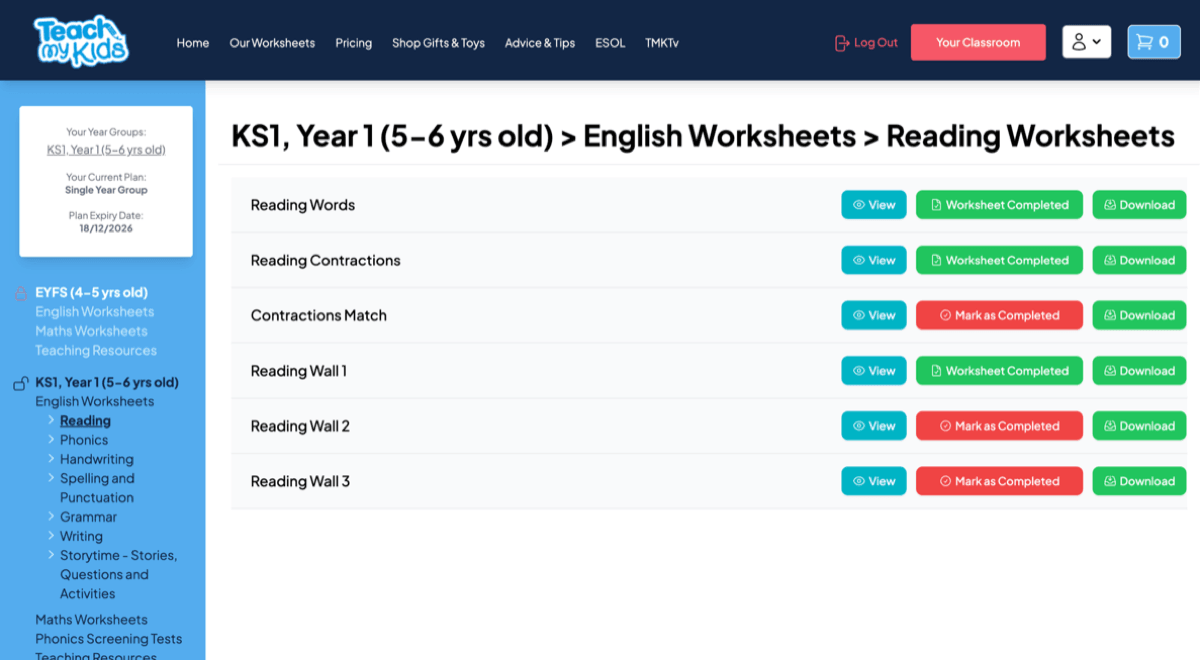
This is your child's online classroom.
You're not buying a single worksheet. You log in to a space set up for your child, where the full Year 3 library unlocks and everything stays in one place.
-
1.
Your own space, any time.
A login for your family. No app to install. Open it whenever suits you.
-
2.
Set to your child's year.
Pick their year group and the right worksheets unlock. Move it up as they grow.
-
3.
The whole library unlocks.
Every worksheet for their year in maths and English, matched to the school curriculum and sorted by topic. Not one sheet, all of them.
-
4.
Print what you need, when you need it.
The whole library is open, so you print this week's topics when they come up at school. No daily limit and nothing to ration. Come back as often as you like.
-
5.
Tick off what's done.
Mark each worksheet as done so you can see what your child has covered.
Common questions
Questions parents ask
- What is the difference between a verb and an adverb?
- A verb is the action or doing word, like run, think or jump. An adverb describes that verb and tells you how, when or where it happened, like quickly, yesterday or outside.
- How can I help my child with writing at home?
- Talk the idea through before they pick up a pencil. Planning out loud takes the pressure off the blank page. Keep the pieces short, praise one thing they did well, then let them read it back to you.
- What is a story mountain?
- A story mountain is a simple plan that splits a story into five parts: the opening, the build-up, the problem, the resolution and the ending. It helps a child see the shape of a story before they start writing.
From the kitchen table
From parents who already print at home.
Real parents, phonics through to SATs.

Putting Your Child's Education First


General
Worksheets by year and topic
- Reception maths worksheets
- Year 1 maths worksheets
- Year 2 maths worksheets
- Year 3 maths worksheets
- Year 4 maths worksheets
- Year 5 maths worksheets
- Year 6 maths worksheets
- Year 1 English worksheets
- Year 2 English worksheets
- Year 3 English worksheets
- Year 4 English worksheets
- Year 5 English worksheets
- Year 6 English worksheets
- Times tables worksheets
- Multiplication tables check
- Multiplication worksheets
- Division worksheets
- Fractions worksheets
- Decimals worksheets
- Percentages worksheets
- Place value worksheets
- Addition worksheets
- Subtraction worksheets
- Telling the time worksheets
- Shape worksheets
- Grammar worksheets
- Fronted adverbials
- Adverbs worksheets
- Nouns worksheets
- Verbs worksheets
- Adjectives worksheets
- Spelling worksheets
- Handwriting worksheets
- Phonics worksheets
- Phase 5 phonics
- KS2 SATs papers
- KS1 SATs papers
- Year 6 SATs
- Clauses
- Conjunctions
- Pronouns
- Determiners
- Modal verbs
- Apostrophes
- Punctuation worksheets
- Angles worksheets
- Symmetry worksheets
- Perimeter and area
- Rounding worksheets
- Roman numerals
- Negative numbers
- Money worksheets
- Sound buttons
- Tricky words
- Common exception words
- Browse all worksheets →
All rights reserved © Teach My Kids 2026. Site by BillyMedia, a Craft CMS developer